Note: it sounds best when you are writing about literature, to discuss a piece of writing with these elements in mind, but avoid using the actual names of the literary elements whenever possible. For example "Hemingway is clearly exploring the male need to appear strong and in charge" instead of "This story has a theme. It is about men being in charge."
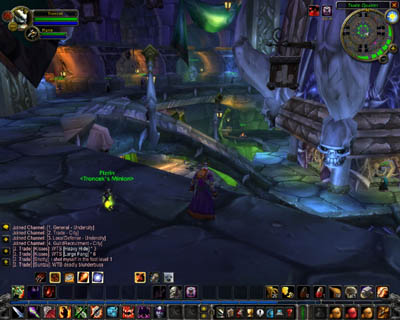
a setting
Setting
Setting is where the events take place, and when. When describing setting, you only have to get as specific as it suits you to be. “In the middle ages in a field somewhere” is just as valid as “three o'clock in the afternoon in a government office in Texas behind an oak desk.” Being specific and being mysterious have different effects. Having said that; don’t miss any details that you’re given by the author. Get all the information that’s there.
You could say:
"Garvin has his story unfold in a dirty alley, leaving his readers to speculate as to the city and state in which it is taking place. The only clue as to the time in which the story takes place is a mention of "President Reagan" which places it in the 1980s."
or
"Irving sets his story "A Prayer For Owen Meany" in a wealthy neighborhood in a small town in New Hampshire during the 1960s."
or even
"Tolkein creates a magical world full of scenic mountains, immense, dark forests and winding rivers in which to tell his story. He calls this world "Middle Earth" and uses the challenging terrain primarily as a way to give the characters huge obstacles to getting where they need to be, which is always a really far walk from wherever they are."
Imagery
Imagery is an appeal to any of the reader's five senses. The author is trying to make it feel as much as possible as if the reader is actually in the story and can experience the environment first-hand. Don't fall into the trap of thinking it's just visual images. Any passage that evokes a powerful sensory reaction, be it aural, tactile, odorous, visual, (or even a taste sensation), qualifies as imagery. Some stories have almost no plot, and rely on being like a snow globe, painting or vacation snapshot of a story, full of idyllic imagery. An author might say "the burnt orange odour of the cooking chemicals made my throat feel hot and greasy, as sounds of icicles chattering against the tin siding rained down on my trembling ears."
Sometimes (often when needing to discuss something boring) writers do something clever, and describe certain events in terms of something outside the story that would be far more interesting. For example, when writing a newspaper article about a political debate, a writer could fill this (normally pretty boring) article with boxing, hockey or cowboy imagery. If s/he did that, you might say:
"When describing the events, Sarazen uses a number of cowboy images, such as "Bush fired the first shot" and "Stephenson put spurs to the environment issue and rode off into the sunset, leaving Bush lying in the dust at the end of the discussion." This added colour and interest to what would otherwise have been a far less engaging story."
or
"Sarazen's use of language such as "Bush stepped up to the plate and hit a long one into the outfield by appealing to 'basic American patriotism'" and "Stephenson countered right off the bat with a homerun of a comment as to our responsibility to 'the youth of America.'" laces the political analysis with baseball imagery.
Theme
Theme is “what the story is all about,” not in the sense of what happened in the plot (which is specific to the story, and unique) but in terms of what universal human experience is being explored that we can all relate to. Whatever things are on the author's mind, what matters to him/her, what his/her view of world is like, these will shape what themes can be seen in the writing. You may not agree with the views of an author, or may not identify with what s/he cares about most, and this may make it hard for you to enjoy something s/he has written. There are any number of ways to describe and discuss a theme you feel is being explored in a story. You could say:
"In his play "The Nancy," Bergstrom explores uncomfortable, worsening relationships between parent and child,"
or
"The movie "Walk The Line" is a gripping depiction of how addiction causes us to hurt and neglect those we love."
Pathos
Pathos is created when the writer is able to make the reader experience a feeling of sympathetic identification with a character in the story. The reader is feeling pathos when s/he thinks things like, “I know how awful that would feel” or “Wouldn’t THAT suck?!” You could say:
"King ensures that his readers feel deeply for his pistol-toting protagonist when he loses several of his fingers, fingers he needs to be a gunslinger."
or
"Parker's description of Spenser sitting alone in his kitchen after Susan has left him, drinking whiskey while the rain pours down outside, evokes strong feelings of pity in the reader."
poor old Charlie Brown
Characterization
Characterization is the author showing the reader what makes a given character “tick,” what motivates him/her/it, what this character's weaknesses or struggles are, what the character's life is all about and what kind of person he or she is. This is done in several ways, including the reader learning from what the character does, what s/he says and thinks, and what is said about him/her. You could say:
"Guthrie's description of how Malone treated his mother reveals Malone to be a cold, ungrateful man who is only interested in money, but who has a soft spot for Pamela."
or
"Luke's actions at Mos Eisley make it clear that he is a whiny, complaining, naive young man who needs to grow up if he is ever going to save the Universe."
Symbolism
A symbol is usually a physical object that represents something else (something other than just its ordinary, literal, physical self.) The classic example is a Canadian flag. On its own it's simply a swatch of red and white fabric, but it clearly represents much more than a red and white chequered dishcloth normally would. The great thing about symbols is that they are so elastic. Nearly anything has the potential to be a symbol and what each one represents is open to broad interpretation. Sometimes, it is really obvious that the author intends something to be a symbol. Sometimes, not so obvious.
For example, if Jane (tired of waiting on Tom hand and foot, always cleaning up after him and not having a life of her own) hands Tom a red and white chequered dishcloth and walks out the door with her clothes in a suitcase, and Tom sits at the table after she has left, staring at the dishcloth and remembering all the times she washed his dishes for him, the dishcloth is now a symbol of Tom having Jane in his life. If Tom gets a new girlfriend, and she comes over and picks up the dishcloth and starts washing Tom's dishes, this is a powerful thing. If Tom stops whining, burns the dishcloth in the BBQ and then goes out and buys a dishwasher, this is also a powerful choice. If Tom drinks himself to death, losing everything, and is found frozen in an alley, still clutching the dishrag, this is another powerful use of the dishrag as a symbol.
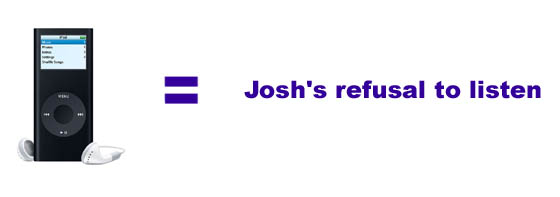
Most symbols are physical things, representing something that is more of an idea, more abstract, harder to understand without using a symbol to help. Sometimes an author will include something in a story, just to be a symbol to help out in this way. If Josh cannot deal with conflict, so every time an argument starts up around him, he puts his headphones in and zips up his hoodie (with the hood up,) you could say:
"Josh's headphones represent his inability to deal with arguments. His hoodie is almost like a suit of armour in which he can feel protected. In this chapter, when Mary and Evan start arguing about Josh, he characteristically puts in his headphones to block out their words, puts up his hood and zips up his hoodie to hide from their accusing gaze. At the end of the chapter when Mary catches Josh at the swimming pool, it is interesting that he has on only a bathing suit, and his iPod is in his backpack out of reach. Mary has caught Josh in a vulnerable state symbolized by his lack of his usual clothing, a state in which he can't "hide" from her in his hoodie. He also can't use the headphones to block out her words. It is unsurprising that, once she starts to lecture him, he goes to his backpack and tries to put in his headphones, attempting to block out her words, causing her to throw his iPod in the pool, so she can finally tell him what she needs to say; that she is having his baby."
Irony
Irony is when something occurs which is the opposite of what you would expect, given what’s gone on before. It can be a character saying something you would not expect them to, given the truth, who they are, or what has happened (verbal irony). An example would be Paris Hilton telling Stephen Hawking that learning math is very important. Irony can also be seen in an outcome to a situation that is surprising (yet oddly fitting) given the circumstances (situational irony). For example: Dr. Atkins, the creator of the Atkins diet, died of a heart attack, very overweight. See how irony can be funny too? A lot of times, irony is used toward the end of a story, and often relates to a character's eventual fate, or something someone says toward the end. You could say:
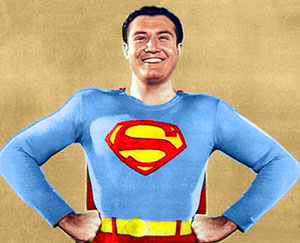
"The fact that George Reeves played Superman on TV, and the words "faster than a speeding bullet" were always heard at the start of each show, makes his death by shooting himself in the head with a .30 bullet ironic. He clearly was not faster than this 'speeding bullet.'"
or
"Sarah had been complaining about the speed limit on her street being too slow earlier in the movie. There is no small amount of irony seen in the fact that, walking out the door to buy aspirin for a headache she got while poring over the letter she'd written to the city, asking for an increase in the speed limit, she is run over by a speeding aspirin truck."
Dual (or multiple) Points of View
Simply put, the use of dual (or multiple) points of view is an author choosing to tell a story to the audience from more than one character’s perspective. Often, as each character tells his/her version of the story, the differences in what each thinks, feels and knows are very interesting. It's a very good way of keeping a story fresh and surprising, and at the same time revealing things about the characters whose perspective is being used (by way of the things they happen to notice or understand.) You might say:
"When Mrs. Galloway tells her version of the events, she is concerned only with Jack and his safety, and doesn't even notice that Natalie is missing. With only Mrs. Galloway's story, the reader might conclude that Jack is a wonderful young man. At the end of the story, when Natalie tells her side of things, Mrs. Galloway is revealed to be a senile old woman, unable to see that her grandson is a brutal kidnapper."
Plot Structure
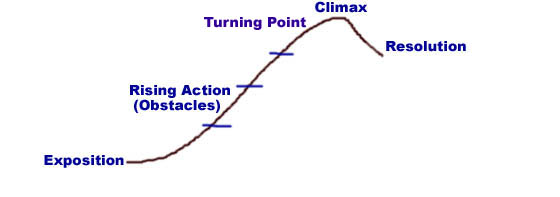
Plot is the sequence of events in a story. It usually has five elements: exposition, rising action, turning point, climax and resolution. The trick is in how these elements are handled in any given story. How is the exposition (information the reader needs to know in order for the story to make sense) handled? The reader starts out knowing nothing. How will the author share all the information without being boring or obvious? Is there a "Sir. Basil Exposition” character who tells the reader anything the author needs them to know, or is the exposition a bit more subtle? Are the events told in the order they took place, or is the story non-linear? (Pulp Fiction and Memento are two movies that rely on telling the story completely out of order to be interesting) Different techniques will yield different effects. Where plot is concerned, it's usually a question of how much suspense is generated. Some plots even have twists; unexpected, yet believable events that, if done well, result in a sharp intake of breath on the part of the reader. You might say:
"The phone message Jim's boss leaves tells Jim (and the reader) everything he needs to know about the ticking bomb. [exposition] Greshem then places a series of apparently impossible obstacles in Jim's way, as the bomb continues to count down.[rising action]First there is his car not starting, then his getting his foot caught in the beartrap, and then the injuries he sustains when a mysterious attacker pushes him down the stairwell. [obstacles that make the suspense grow] The turning point of the story is when Jim arrives and Paul tells Jim that the green wire is the one to pull, then unlocks the door so Jim can gain access to the room that is wired to explode. [turning point] Suspense reaches its peak when Jim falls on the bomb, pulls the green wire with his teeth and blows the entire building sky high. [climax] Greshem resolves the story in the final scene by depicting Martha, Ashley and Kyle standing together at Jim's funeral, discussing what a liar Paul always was, before (ironically) he was killed by a peice of flying debris from the very bomb that (it turned out) he had himself made. [resolution] "
Allusions
When an author alludes (or "makes an allusion"), s/he is writing something that refers to something he or she did not write. S/he may mention a movie, a song, a historical event, a book, a famous person (real or fictional), or something of this kind from the real world. For example, the title of a story about one man betraying another might not be written by the author at all, but might be, rather, the author sounding smart by stealing something good from another source. The author could say "In the bible, Judas betrayed Jesus, and in Julius Caesar, Brutus betrayed Julius Caesar, so I think I'll either call my own story "My Own Personal Judas" or "The Proximity of Brutus" and people will know I read the bible or Shakespeare and think I'm all smart and stuff." This makes the title an allusion (a reference) to the bible.
Quoting cool bits from works like the bible, Shakespeare or Dickens always makes you sound smart. Try this in things you write this year. Old episodes of "Star Trek" from the 60s quoted bits of these works all the time, including calling episodes things like "The Conscience of the King" (from Shakespeare's Hamlet) and "By Any Other Name" (from Shakespeare's Romeo and Juliet). This made a low-budget show with pointy-eared alien guys seem much more intelligent.
Another way to use allusions is (as with shows like The Simpsons, Robot Chicken, Family Guy, and South Park) as a way to make the audience laugh and say "I forgot all about watching the 80s Transformers cartoon when I was a kid. And now they've alluded to it on Family Guy in a really funny way!" Sometimes a spin can be put on the allusion, as in an episode of Family Guy being called "Little Red Riding Stewie."
An allusion can also be merely a short-hand to explaining something in detail.
for example:
"That guy thinks he's James Bond or something," thought Geoff, as he burned Clark's picture.
Humour
When an author uses humour in a work, s/he hopes the reader will be amused, even if only a little, and only inside. We tend to laugh at a character in a story because we think they are foolish (or really bad at something.) We also laugh at people with predictable weaknesses. Often we laugh when a character has lied or tricked someone, and is constantly in danger of getting found out. Sometimes, though, we laugh at how clever a writer is being. It is natural to laugh with delight at both sudden, unexpected silliness and/or cleverness. Shakespeare, for example, usually has us laugh at characters who are drunk, stupid, deeply in love with someone who doesn't like them, or all three. Sometimes we laugh at how interestingly and succinctly he has summed up some universal human experience. But usually, we laugh at people getting hurt or losing their dignity in some way. In old silent comedies, some actors were hired purely because they could look so very dignified right before getting a pie in the face or a kick in the groin.
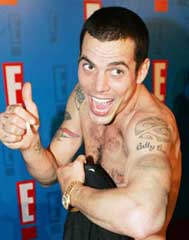
we like to laugh at fools doing stupid things
Tone/Atmosphere/Mood
These three words do not mean exactly the same thing, but I have sloppily grouped them together here and said "good enough." We all have a certain emotional reaction to the places we find ourselves in and to various things that are said or written. Often, an author is looking to create a very specific mood in the reader by his/her use of words, and often by the setting. Some stories have a "dark" feeling to them, others a "light" feeling; some authors write in a way that makes us think they are grouchy and stern, others warm and charming, still others, cynical and amusing. Think of the tone of an author's writing style (or the mood of a story) as being distinct, like a home-baked pie. Who made it, what kind of day s/he was having, and what s/he thought would be a good idea to put in it, all affect the final "taste" of the thing. The personality of an author showing through in the writing adds tone. This affects our mood when reading. You might say:
"Gaiman uses a darkly ironic, tongue-in-cheek, formal tone in this story, and the atmosphere added by the dim, dirty pub is felt as well."
or
"Barker's descriptions of the stark, wind-blown vacant lot, with his terse, not overly descriptive language, adds to the feeling of loneliness the reader shares with the protagonist."
Missing information
It is often effective for the reader to read an entire story, wondering what is going on the whole time. This is achieved by the author very carefully not telling the reader various things that s/he really wants to know. Not knowing something you want to know is disturbing, and the reader will read more and more, looking to find out something the author may or may not choose to ever reveal. You might say:
"It is Dixon's careful omission of the identity of the mysterious figure that makes the reader wade through chapter four's tedious descriptions of Aunt Gertrude's meal."
How To Use These Literary Terms
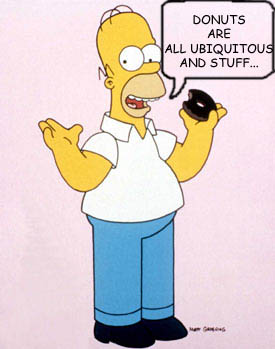
There are tricks to writing about literature and sounding smart while doing it. Just dropping in the names of the literary terms sounds like a stupid person trying to use smart words. Talking about the ideas behind these terms without using the names of the actual literary terms sounds like you are so familiar with them, that you don't need to use them all the time. There are some other tricks:
Do not tell the events of the story. That's what you do on a reading comprehension test. Refer to these events only while making some kind of point, only if they help make that point. Making points is the whole point of writing. The story is already written. No one's paying you to re-tell it. I care if you can talk about how the author put the story together, and what makes it work. I'm assuming you can read and am not checking to make sure you can re-tell me the story.
Do not say the story is good or bad. That's not your job as a scholar. I don't care whether a high school student thinks Shakespeare was any good or not. (No one cares if I think he was any good or not, either.)
Use this formula: "[author's last name] + something he/she is doing, all described in the present tense" when writing about literature.
for example:
"King [describes/establishes/hints/explains/depicts/explores/creates/tantalizes/delights]...."
You may also toss in the occasional sentence that starts "[name of the work studied] is..."
for example:
"'Johnny's Tooth" is a disturbing short story that deals with the cruelty of children to one another, but in a darkly comedic way"
or
"Atwood's "Preponderance" is a fantastic example of what goes wrong when authors take themselves too seriously and write four pages of description of how exactly a woman drinks her tea as she ponders what she will do today."
Do not write
in the past tense (i.e. do not say "Lewis wrote" or "George ran" but rather, write "Lewis writes" and "George runs" even if the author is long dead and the whole story is written in the past tense, as most stories are)
Do not mess up what kind of work you are discussing. If you are discussing a short story, do not say "In the play 'The Father'" or if you are discussing a play, do not say "In the novel Hamlet." If Hamlet is a play, it is best not to call it a story (or a novel or a book. It's a play.)
Note that I use the word "depict" rather than "portray" on this page. Authors depict the people and things in their stories. Generally speaking, actors portray people in movies and artists portray people in art. Writers do not "depict" abstract things like themes, pathos or other literary elements, and certainly do not "portray" them, though you might say they "use," "create," "present" or "explore" them. An actor may portray a person (like Pierre Trudeau, Spider-man or Johnny Cash) in a movie. If the person is real and alive, s/he may complain as to the accuracy of the portrayal. An artist might equally portray them in a portrait s/he has drawn of the (usually real) person, or sometimes a setting or event. Usually, though, people are portrayed, and events are depicted. In any case, to portray or depict means "to make a picture of." You don't "make a picture" of something abstract like irony.
Remember: your job is to catch the author using literary techniques and writerly tricks, and then to explain what you've seen, using good, scholarly, clear, formal language. Your job is NOT to put a bunch of scholarly, smart-sounding words together without having a thing to say. It is child's play to tell the difference between the two.